
Source: slashfilm.com
Part 4: Theme – Smart Rebellions
Well, if we’re talking about thematic throughlines, let’s analyze two big themes of the film as a whole.
For our first, this film is a thorough refutation of the heroic ideal of the noble sacrifice and how it’s been used in Star Wars. The characters in this film who do sacrifice themselves do so in order to ensure the survival of the Resistance. Luke gives his last bit of energy to buy time for the Rebels to escape, and Holdo goes out (in the most bad-ass way possible, by the way) to provide cover for the Resistance to continue their escape.
Contrast this with Finn’s attempted sacrifice, which the movie explicitly tells us would have been a bad idea. Finn’s ski speeder was incapable of taking out the battering ram cannon. His weapons had melted, and he would have died in the process. And even if he’d succeeded, he would have bought his allies a few more minutes at most at the cost of one of their few remaining soldiers. This would have been a selfish sacrifice that would have lost more than it gained.
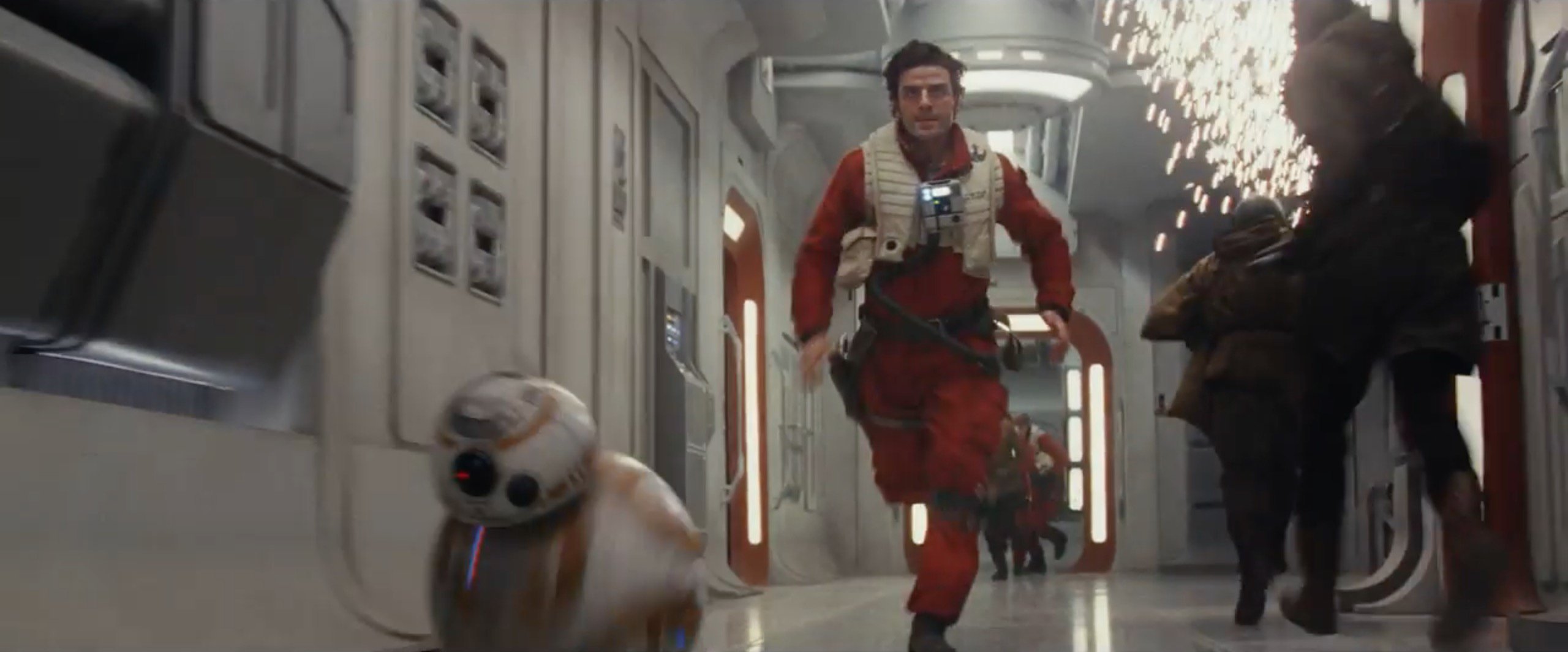
Last Jedi is all about fighting smarter, and in doing so, it sets out the idea that the bold, risk-taking, big damn hero way to go is often foolish and wrong. Look at Holdo and Poe’s story. Poe gets the entire bomber fleet killed with one of his half-cocked plans, and is demoted for it. Holdo, as such, refuses to inform him about her plans, because he has demonstrated that he’s notunable to function as a leader. Poe crafts another loose-cannon plan, sends Finn and Rose off, and stages a mutiny. But, oops, it turns out that Holdo’s plan would have let everyone evacuate safely. Poe’s move goes bad (Finn and Rose are caught, and the First Order is informed about the fleeing Resistance ships), and most of the Resistance are annihilated. Poe got all those people killed. Explicitly, they would all be alive if he’d just shut up and trusted Holdo.
She was right.
Fight smarter.
