
Can You Guess How Far These Animals Can Really Travel?
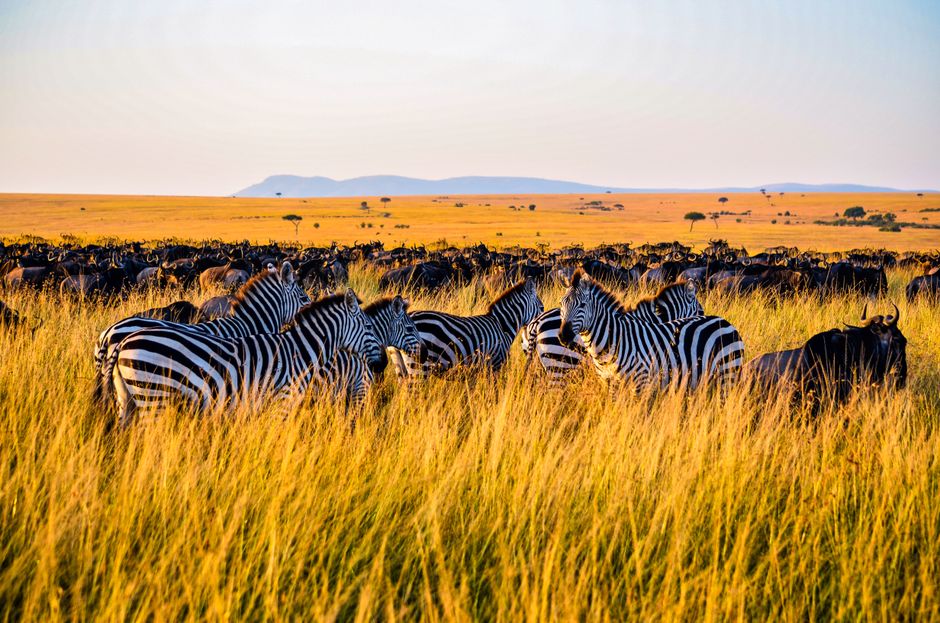
Most people underestimate what animals can do. Think you know better?
9 questions
0%
Congrats, you finished!
Here is your result:
0/0
1. How far can a dog hear a sound compared to human hearing?
About 10 times farther — Dogs hear sounds up to 4 times the distance humans can. They also detect frequencies as high as 65,000 Hz, well beyond our 20,000 Hz limit.
2. A homing pigeon can navigate using which of these abilities?
Memory of landmarks and sun position — Pigeons use multiple strategies: visual landmarks, the sun's position, and their excellent spatial memory. They can return home from unfamiliar locations hundreds of miles away.
3. Approximately how many miles does an Arctic tern migrate annually?
About 44,000 miles — Arctic terns travel roughly 44,000 miles per year pole-to-pole—the longest migration of any animal. This journey spans the full globe twice.
4. Which animal uses echolocation to navigate in complete darkness?
Greater horseshoe bat — Horseshoe bats emit ultrasonic calls and listen to returning echoes to locate prey and obstacles. Their precision allows them to catch insects mid-flight in total darkness.
5. A rattlesnake can sense heat within what distance using specialized pits?
3 feet away — Pit organs along a rattlesnake's jaw detect infrared radiation from warm prey up to 3 feet away, allowing hunting in complete darkness.
6. How much farther can an elephant hear infrasound compared to human speech?
Up to 20 times as far — Elephants produce and hear infrasound—frequencies below 20 Hz—that can travel up to 20 miles. This allows herds to communicate across vast distances.
7. A sperm whale can dive to depths exceeding how many feet while hunting?
About 11,000 feet — Sperm whales routinely dive beyond 11,000 feet—deeper than Mount Everest is tall—hunting giant squid in absolute darkness using echolocation clicks.
8. How far can a mantis shrimp see color wavelengths compared to humans?
Twelve to sixteen times as many color receptors — Mantis shrimp have 12–16 color receptors versus our 3, allowing them to perceive ultraviolet, visible, and polarized light simultaneously with unmatched precision.
9. A bar-tailed godwit can fly nonstop for how many hours on migration?
About 40 hours — Bar-tailed godwits undertake the longest nonstop animal migration: up to 7,000 miles without landing, powered by stored fat and a state of flight-induced sleep.
Our quizzes are for entertainment purposes only. Scores may vary.
Advertisement