
From breaking barriers to reshaping entire nations, these women proved that history belongs to the bold. You'll discover the untold struggles, stunning achievements, and surprising connections between some of humanity's most powerful female figures—and why their legacies matter more today than ever.
#1: Cleopatra VII — The Pharaoh Who Mastered Politics and Power

You probably think Cleopatra was just a seductress, but she was actually a brilliant political strategist who spoke nine languages and saved Egypt from Roman conquest—at least temporarily. She negotiated with Julius Caesar and Mark Antony not through charm alone, but through sharp intellect and calculated moves. Her real superpower? Understanding that in ancient politics, perception and alliance were everything, and she wielded both like a master.
#2: Joan of Arc — The Teenager Who Led Armies

Imagine being a teenage girl commanding thousands of soldiers into battle. Joan of Arc did exactly that in 15th-century France, leading military victories during the Hundred Years' War despite having zero military training. What's remarkable is how she convinced hardened warriors to follow her based purely on conviction and claimed divine inspiration. Whether you believe her visions were real or strategic genius, her impact on French nationalism was undeniable and legendary.
#3: Harriet Tubman — The Woman Who Freed Hundreds
You know Harriet Tubman escaped slavery, but you might not realize she personally led around seventy enslaved people to freedom via the Underground Railroad without ever losing a passenger. She was so effective that slave owners offered substantial rewards for her capture—she had a price on her head but never wavered. After the Civil War, she founded a home for elderly African Americans, proving her commitment to liberation extended far beyond her own freedom.
Advertisement
#4: Catherine the Great — The Empress Who Expanded an Empire
Catherine the Great ruled Russia for thirty-four years and transformed it into a major European power through aggressive expansion and cultural reform. She wasn't born Russian royalty—she was German and maneuvered her way to absolute authority through intelligence and political savvy. Under her reign, Russia gained territories that included parts of Poland and access to the Black Sea, fundamentally reshaping the geopolitical map of Eastern Europe forever.
#5: Marie Curie — The Scientist Who Changed Everything

Marie Curie wasn't just a physicist—she was the first woman to win a Nobel Prize and the only person to win Nobel Prizes in two different scientific fields. She discovered polonium and radium while working in a converted shed, and her research laid the groundwork for nuclear science. Tragically, the radiation exposure that fueled her discoveries eventually caused her death, but her legacy revolutionized medicine, physics, and what we thought women could accomplish in science.
#6: Emmeline Pankhurst — The Suffragist Who Fought for Votes
Emmeline Pankhurst didn't ask nicely for women's voting rights—she orchestrated direct action campaigns that shook British society to its core. She was arrested multiple times, went on hunger strikes in prison, and her militant tactics made her enemies among politicians and allies alike. Yet her organization, the Women's Social and Political Union, became so disruptive that women eventually had to be included in the conversation about democracy and representation.
Advertisement
#7: Golda Meir — The PM Who Led a Nation

Golda Meir became Prime Minister of Israel in 1969, making her one of the world's few female heads of state during that era. She led her country through the Yom Kippur War and faced criticism for both her military decisions and peace negotiations, but she never apologized for defending her nation's interests. Her leadership style was direct and uncompromising, proving that women could handle the toughest geopolitical challenges just as capably as any man.
#8: Rosa Parks — The Activist Whose Refusal Changed Laws

Rosa Parks' refusal to give up her bus seat in Montgomery, Alabama sparked the Civil Rights Movement's most pivotal moment—yet she later revealed she was trained in nonviolent resistance beforehand. She wasn't a spontaneous act of defiance; it was calculated civil disobedience. Her quiet courage inspired the Montgomery Bus Boycott, which lasted 381 days and forced desegregation, proving that one person's principled stand can shake an entire system.
#9: Eleanor Roosevelt — The First Lady Who Became Her Own Icon
Eleanor Roosevelt transformed the role of First Lady from ceremonial figurehead into an actual political force. She held her own press conferences, wrote a daily newspaper column, advocated fiercely for civil rights, and championed the Universal Declaration of Human Rights. She was so influential that she remained active and relevant long after Franklin's presidency ended, proving her power came from her own convictions, not just her husband's position.
Advertisement
#10: Malala Yousafzai — The Modern Activist Redefining Courage
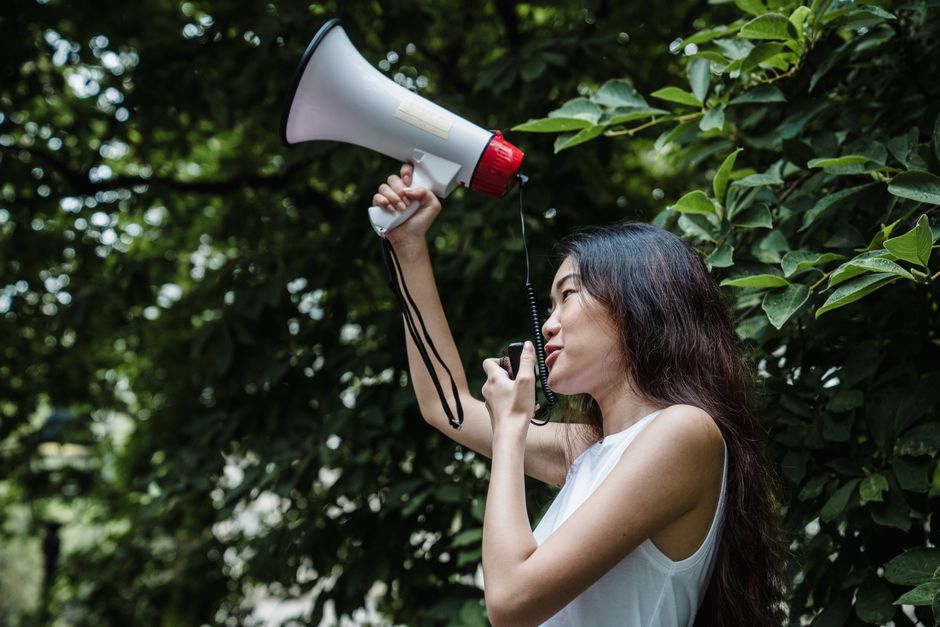
Malala survived a Taliban assassination attempt at age fifteen for advocating girls' education and became the youngest Nobel Peace Prize winner in history. Her resilience and refusal to be silenced inspired a global movement for educational access, particularly for girls in developing nations. She represents how women's influence continues to evolve—her power comes from moral clarity, platform access, and an unwillingness to accept injustice, setting the template for modern changemakers.
These ten women shattered expectations and reshaped the world through courage, strategy, and unstoppable determination. Their stories remind us that history's most powerful figures often had the least obvious advantages—but they seized them anyway.
Advertisement